20 hours ago
When Sally Harpold bought cold medicine for her family back in March, she never dreamed that four months later she would end up in handcuffs.(ht Cato)
Now, Harpold is trying to clear her name of criminal charges, and she is speaking out in hopes that a law will change so others won’t endure the same embarrassment she still is facing.
[..] Harpold is a grandmother of triplets who bought one box of Zyrtec-D cold medicine for her husband at a Rockville pharmacy. Less than seven days later, she bought a box of Mucinex-D cold medicine for her adult daughter at a Clinton pharmacy, thereby purchasing 3.6 grams total of pseudoephedrine in a week’s time.
Those two purchases put her in violation of Indiana law 35-48-4-14.7, which restricts the sale of ephedrine and pseudoephedrine, or PSE, products to no more than 3.0 grams within any seven-day period.
When the police came knocking at the door of Harpold’s Parke County residence on July 30, she was arrested on a Vermillion County warrant for a class-C misdemeanor, which carries a sentence of up to 60 days in jail and up to a $500 fine.
Traces of cocaine taint up to 90 percent of paper money in the United States, a new study finds.I'd heard this before, but apparently that's a new study confirming it.
Officials say a suspected drug dealer who led police on a 90 mph chase in Indiana was arrested after he stopped suddenly at a Taco Bell parking lot.
Fort Wayne police Sgt. Mark Walters says 36-year-old Jermaine Askia Cooper told officers he “knew he was going to jail for a while” and wanted to get one last burrito.
Glenn Greenwald has more.Over at Drug War Rant, Peter Guither notes the strange reaction of a drug policy official to the new Cato report, Drug Decriminalization in Portugal:
Glenn Greenwald’s excellent report (on the successful decriminalization of all drugs in Portugal for personal use) was picked up by Scientific American: Portugal’s Drug Decriminalization Policy Shows Positive Results
What really caught my attention in this article was that they got the UNODC to agree that it seemed to work, but the response was Kafkaesque.
Walter Kemp, a spokesperson for the United Nations Office on Drugs and Crime, says decriminalization in Portugal “appears to be working.” He adds that his office is putting more emphasis on improving health outcomes, such as reducing needle-borne infections, but that it does not explicitly support decriminalization, “because it smacks of legalization.” Yes, decrim works, but we don’t support something that actually works because it sounds like something we’re afraid to talk about. Right.
A spokesperson for the White House’s Office of National Drug Control Policy declined to comment, citing the pending Senate confirmation of the office’s new director, former Seattle Police Chief Gil Kerlikowske. The U.S. Drug Enforcement Administration (DEA) and the U.S. Department of State’s Bureau of International Narcotics and Law Enforcement Affairs also declined to comment on the report.Well, I guess no policy is better than what we’re used to.
On July 1, 2001, a nationwide law in Portugal took effect that decriminalized all drugs, including cocaine and heroin. Drug possession for personal use and drug usage itself are still legally prohibited, but violations of those prohibitions are deemed to be exclusively administrative violations and are removed completely from the criminal realm.
In a new study, constitutional lawyer and Salon.com writer Glenn Greenwald examines the Portuguese model and the data concerning drug-related trends in Portugal, and argues that, “judged by virtually every metric, the Portuguese decriminalization framework has been a resounding success.”
“The church is not simply the prolife movement, and to the extent that every interaction between the church and our political system is held hostage to the demands of the most confrontational elements of that movement, the church’s social message, including its message about abortion, will be marginalized and ineffectual. The respect and honor owed the office of the president does not depend on any particular president’s merits (as Buckley often reminded his liberal critics). That respect is, among other things, a powerful affirmation of the willingness of Americans to live together peacefully, despite profound disagreement. Notre Dame’s invitation to President Obama is perhaps best understood in that light.”E.D. Kain: Pop Christianity...
Christianity in America has been weaved into pop culture much to the detriment of that religion. The co-opting of pop culture to try to make Christianity seem more “hip” to the times has backfired. Simply countering every Nirvana or Green Day with a Christian version of the same will not make teenage boys prefer the latter to the former. When cool becomes more important than sacred then we’ve got a problem. The fact of the matter is that secular movie makers will always be able to make more edgy films, and secular musicians will always be able to make cooler music, and the reason for this is they’re just trying to make movies and music - they’re not trying to make explicitly Christian movies and music.Josh Wimmer:
“It’s not fair for me just to single out the lyrics, because I also know I’m listening to Christian radio immediately because of the shimmery keyboards and amped-up major-key guitar lines — there’s a sound there that Christian pop musicians have staked out as their own, and I get why it sounds “Christian” to them, but it rings about as true to me as a heaven actually full of harp-strumming cherubs. Mainstream pop may suck, but at least it sucks in so many different ways.”Cato: Democrats Agree on Health Plan Outline: Be Afraid, Be Very Afraid...
Given the problems facing our health care system-high costs, uneven quality, millions of Americans without health insurance–it seems that things couldn’t get any worse. But a bill based on these ideas, will almost certainly make things much, much worse.Atlantic:
Health care isn't a single good, nor, like food, is it easily defined in terms of a minimum to sustain life. Studying other countries' supposedly universal systems only demonstrates how fraught the concept of "health care" is: one bundle of services in British Columbia and a less-generous one in Nova Scotia, one in England and another in Scotland, one in New Zealand before the election and another afterwards. Arguably the U.S. already has universal care, in the sense that everyone can get some care-if only from an emergency room-for some things, and that citizens (a critical word in this context) without money are covered by Medicaid. The real issue is how you define "health care." What gets included is a matter not only of medicine and economics but of culture and politics.Politico: Budget cuts concern contractors...
Though the details of the $534 billion defense budget are still unknown, there are numerous signs that Gates could take the ax to a major defense weapons program as early as next week.Red State Update on legalization:
That has defense industry officials, whose fortunes will rise or fall on the outcome, madly trying to decode which programs are the most vulnerable and scrambling to defend them.

An Afghan security officer stands guard as flames rise during a drug burning event on the outskirts of the city in Herat province, west of Kabul, Afghanistan, Wednesday, March 18, 2009. Over 2,000 kilograms of narcotics, composed of heroin, opium and hashish, were burnt along with some bottles of alcoholic drinksMore at TBP

Joaquín "El Chapo" Guzmán Loera, reported head of the Sinaloa cartel in Mexico, ranked 701st on Forbes' yearly report of the wealthiest men alive, and worth an estimated $1 billion, today officially thanked United States politicians for making sure that drugs remain illegal. According to one of his closest confidants, he said, "I couldn't have gotten so stinking rich without George Bush, George Bush Jr., Ronald Reagan, even El Presidente Obama, none of them have the cajones to stand up to all the big money that wants to keep this stuff illegal. From the bottom of my heart, I want to say, Gracias amigos, I owe my whole empire to you."This is hearsay and suspiciously timely, but the sentiment makes sense. If you were the sort of ruthless person who ran a drug empire, wouldn't you be thankful for prohibition?

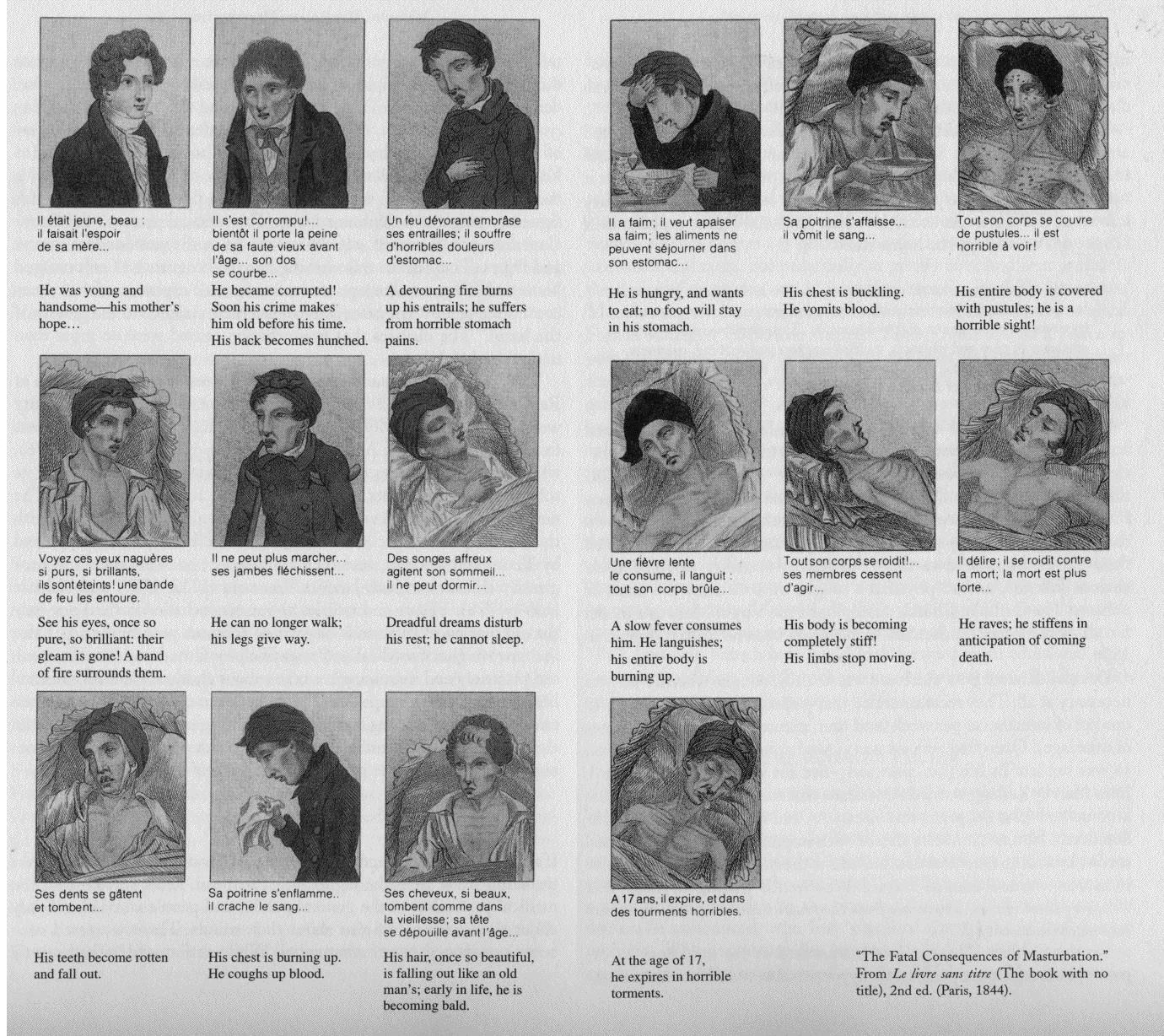
"The Drunkard's Progress", an iconic lithograph by Nathaniel Currier, exhibits the beliefs of the Temperance movement in the United States.Such ideas are nobly intentioned, but misguided when enforced by the state. Proposals for government bans would need to be carefully engaged and counterargued if prohibition worked. But it never has. It's a net failure on every front and has caused people to opt for much more dangerous alternatives like garage meth -- just as people were once poisoned by bad moonshine.
Some people simply can't understand that if drugs were legal, our enemies wouldn't have a monopoly on them and be out of their lucrative business. So when you tell them enemies are financed by opium, they think we need to double down on the task of eradicating drug trade. They have no perspective on how intractable that is, or how badly we've been failing at it for decades.Salmon Rushdie here is an example of a smart guy who doesn't get it. Good of Hitchens to set things straight.
STEVE LOPEZ: Former judge fired up on making pot legalNot strange...as it should be, if people were honest rather than trying to further a career in drug law enforcement.
All right, tell me this doesn't sound a little strange:
I'm sitting in Costa Mesa with a silver-haired gent who once ran for Congress as a Republican and used to lock up drug dealers as a federal prosecutor, a man who served as an Orange County judge for 25 years. And what are we talking about? He's begging me to tell you we need to legalize drugs in America.
"Please quote me," says Jim Gray, insisting the war on drugs is hopeless. "What we are doing has failed."Maybe not yet, but eventually. All we can do is raise awareness.
As far as I can tell, Gray is not off his rocker. He's not promoting drug use, he says for clarification. Anything but. If he had his way, half the revenue we would generate from taxing and regulating drugs would be plowed back into drug prevention education, and there'd be rehab on demand.
So here he is in coat and tie -- with a U.S. flag lapel pin -- eating his oatmeal and making perfect sense, even when talking about the way President Obama flippantly dismissed a question about legalizing marijuana last week during a White House news conference.
"Politicians get reelected talking tough regarding the war on drugs," says Gray. "Do you want to hear the speech? Vote for Gray. I will put drug dealers in jail and save your children."
I had gone to visit Gray in part to discuss his support for a bill introduced last month by Democratic San Francisco Assemblyman Tom Ammiano, who is calling for marijuana to be regulated and taxed much like alcohol.
Does the bill have a chance?
I wouldn't bet a pack of Zig-Zag rolling paper. It's a provocative idea that gets dusted off now and again, but the usual reaction is either ridicule or sober concern about sending the wrong message to youths, among others, and making substance abuse a greater problem than it already is.Are you sure that's not asking too much?
But take a look at the world, people.
Mexican drug lords are better armed than police and killing thousands who don't buy into the corruption -- with the violence crashing our borders -- and American enemies abroad are financed by the opium trade.Stop right there. Some people simply can't understand that if drugs were legal, our enemies wouldn't have a monopoly on them and be out of their lucrative business. So when you tell them enemies are financed by opium, they think we need to double down on the task of eradicating drug trade. They have no perspective on how intractable that is, or how badly we've been failing at it for decades.
Ten days ago I visited a Los Angeles elementary school where students practice dropping to the floor and making themselves as flat as pancakes to avoid stray bullets from the gang-infested neighborhood, and drugs play a role in that violence. On Wednesday I strolled through downtown Los Angeles and marijuana smoke filled the air, a mocking reminder of the impossible task of eradicating drugs, despite the trillions spent and the thousands of people we've locked away in our jails and prisons.Oh so you're paying attention, then. Sadly most people aren't.
Bravo to Hillary Rodham Clinton, says Gray, for admitting last week that American demand for drugs is responsible for the bloodshed in Mexico.It's a tragic state of affairs. But one I think most people should be able to understand, once they're prodded into really thinking about it.
"But she got the facts right and the solution wrong," he says, just as everyone else has in a war that's been escalating for decades.
Gray was on the Municipal Court bench in the 1980s when he took his first hit from the reform pipe. The vast majority of the cases coming before him were alcohol-related, he said, and he was able to divert defendants into screening and recovery. But he couldn't do the same in drug cases, and he was frustrated, both in Municipal Court bench and later on the Superior Court bench.
"Our jails are filled with low-level users who sold to support the habit," says Gray, who believes that the tougher the criminal justice system gets on drug offenders, the fewer resources it has to go after rapists, robbers and other criminals.
In 1992 he called a news conference in Santa Ana and stated his case for legalized drugs. In Orange County, that was like coming out in favor of communism and nose rings, but Gray never flinched from insisting that the drug war was a waste of tax dollars and that it was putting too many citizens and police in harm's way. He became a member of Law Enforcement Against Prohibition and wrote the book "Why Our Drug Laws Have Failed and What We Can Do About It." "His book drives a stake through the heart of the failed war on drugs," says a back-cover blurb from Walter Cronkite.Many such stakes have been driven, but it doesn't count for much when so few people are paying attention or able to think meaningfully beyond "drugs are bad, please protect my kids for me".
Gray, by the way, is a former Peace Corps volunteer and Navy lawyer who now counts himself a Libertarian, all of which reminds us why we love California. He says his conservative roots make him the best man for the campaign to legalize drugs.But apparently not age lines. Note "Young Republicans". As with legalizing gay marriage, we're stuck waiting for enough narrow-minded geezers to die.
"Who better than a conservative judge in a conservative county who's never used any form of illicit drugs?" he asks.
When Ammiano's bill was introduced, Gray was invited to the news conference by the openly gay Democrat.
"I have received standing ovations from the ACLU and the Young Republicans of Orange County," says Gray. "It crosses all political lines."
Not everyone thinks he's citizen of the year, though. Gray says he's often asked about sending the wrong message, and he responds with a reality check. Anyone who wants illegal drugs can easily get them, but doing so may put them in harm's way. Wouldn't it be smarter to sell the drugs at government stores, so advertising could be outlawed, taxes collected on one of California's biggest cash crops and drug gangs eradicated?I didn't realize advertising was such a problem, but I'm all for eradicating the black market and associated violence.
If Gray had his way, no one under 21 could buy drugs. But anyone older than that could legally buy marijuana -- which, he says, causes nowhere near the amount of death and disease as alcohol. The state would need to see how that works, he said, before moving on to legalizing the sale of harder drugs. Sure, he says, legalization might lead to more toking at first, but he believes drug use would wane when it was no longer forbidden and the novelty wore off.Well let's not be hyperbolic. I think offering little kids free heroin injections might qualify as possibly worse. But as pertains to consenting adults, yes, prohibition is one of the most harmful policies ever enacted in otherwise free societies.
I'm not sure I agree with that point, but I say we give it a try, and I do buy into Gray's argument about who the winners are in the current system.
First, there are the drug lords in Mexico and beyond. Then the drug gangs that peddle the stuff here. Next come the law enforcement agencies, prison contractors and prison guards, which use the war on drugs to demand more resources. And finally, there are the politicians who have wooed voters since the Nixon administration by pledging to support the war on drugs.
"My personal opinion," says Gray, "is that we couldn't have done worse if we tried."
Wethersfield, Conn. (WTNH) - Officers from numerous police departments charged into Wethersfield High School Thursday to hunt for drugs.Radley: "That's not all it proves."
Armed with police dogs, officers from Wethersfield, Rocky Hill, Manchester and New Britain raided the high school at 411 Wolcott Hill Road.
Locker by locker and room by room, police and their dogs sniffed around to send the school district’s message that drugs will not be taken lightly.
Police also searched more than 100 cars in the school’s parking lot, which led to the arrest of one student for drug paraphernalia.
Police ended up not finding any drugs, and that lone arrest is something School Superintendent Michael Kohlhagen is proud of.
"This is just one step in the right direction, to ensure our students continue to learn and thrive in a drug free environment." Kohlhagen said and later added, "This issue has been and remains a priority; our entire administration and faculty remain committed to the health, safety and welfare of our students."
Kohlhagen said Thursday’s raid proves that Wethersfield High School is safe and drug free.
I think everyone should welcome the opportunity to have their property and persons searched so that they can proudly prove to the state their fitness to be loyal subjects. To resist can only mean you’re hiding something. Schools are a particularly appropriate venue for this forceful style of governing because it helps instill in students at a young age what their place is in society as mere civilians, while reinforcing their patriotism, respect for the primacy of government, and their subservience to the national will. This is indeed a powerful tool to squelch the rebellious and independent attitudes that have characterized past generations of young people.
"With over 1 out of 30 Americans controlled by the penal system, why not legalize, control, and tax marijuana to change the failed war on drugs into a money making, money saving boost to the economy? Do we really need that many victimless criminals?"[Update: there were actually multiple questions voted high, so Obama may not have been responding to this specific one]
- Ryan Palmer, Dallas, TX
"Can I just interrupt, Jared, before you ask the next question, just to say that, you know, we -- we took -- we took votes about which questions were going to be asked, and I think 3 million people voted or 3.5 million people voted. I have to say that there was one question that was voted on that ranked fairly high, and that was whether legalizing marijuana would improve the economy and job creation.Here he first focuses on the "money making, money saving boost to the economy" portion of the question. And he's morphing it into a question about "growing the economy".
And I don't know what this says about the online audience... (laughter)
... but I just want -- I don't want people to think that -- this was a fairly popular question. We want to make sure that it was answered.
The answer is, no, I don't think that is a good strategy to grow our economy. So -- all right...
Q Robert, in the online town meeting, when the President said he doesn't think legalizing marijuana would give the economy a boost, was he giving a political answer or an economic answer? Does he have economic numbers to back that up?Meanwhile Andrew Sullivan opines on "Obama's Pathetic Pot Answer":
MR. GIBBS: I'm unaware of a CEA analysis -- (laughter) -- regarding that. I think the --
Q Will you let us know if there is one? (Laughter.)
MR. GIBBS: I think you've heard the President talk about getting us on a path toward sustained economic growth. I don't think he believes that that is a part of that plan.
Q What about medicinal marijuana?
MR. GIBBS: I think the -- I'd point you to the Justice Department on developments on that.
The President asked people to ask their questions. Obviously interests aligned with certain viewpoints did so, and the President wanted to answer the question that, no, it was not -- he did not think a good economic strategy.
Q Did that question get the most votes of any?
MR. GIBBS: I will ask Macon and those guys. It is interesting when -- I think several of those topics were in things like financial stability or --
Q Green jobs.
MR. GIBBS: Green jobs, right. (Laughter.) It's unclear what leap of faith one has to make to ask that question in some of the -- some of those -- right, some of those -- some of those topics.
Q Why did he even bring it up? Why did he even bring it up? I mean, no one asked it online and no one asked it --
MR. GIBBS: No, people -- people asked it online –
Q I mean, no, I know they voted for it, they voted for it. But he brought it up on his own. This is what I'm saying. Why did he even bring --
MR. GIBBS: April, the concept of the virtual town hall meeting was to have people --
Q Transparency?
MR. GIBBS: No, no, let me -- you can ask and I'll answer -- (laughter) -- that the President asked people to go to the web site, ask questions of the administration, vote on which questions they wanted to have the President answer, and that he would do so. And as I said and as Ann said and -- maybe we should have said "clean-energy jobs" -- that would have --
Q You said "green."
MR. GIBBS: Yes, I know. That in some topics -- you know, this is not the first time that an interest group gets on a web site and votes many times for their question to be answered, and the President thought he should answer it and I think he did.
Q But, Robert, he didn't take on the serious issue. He made a joke out of it. I mean, there were a lot of questions about legalization of marijuana, not as a job creation program, but just as a serious policy issue. And with what's happening in Mexico --
MR. GIBBS: It poses the legal -- I'll do this for the President -- I didn't -- I neither emailed my question in, nor voted for it, but the President opposes the legalization of marijuana, and I'd -- I'll say I did that without even the slightest hint of laughter.
Q Can you say why?
Q Robert, while you're on this same subject can we follow up?
MR. GIBBS: Hold on one sec. Hold on.
Q What did the President learn in this? A lot of the questions were things he talks about all the time.
Q Annie, there was a question pending on why -- why he feels that way about legalizing marijuana.
MR. GIBBS: He does not think that that is -- he opposes it. He doesn't think that's the right plan for America.
Q But a follow-up on the process, on the --
MR. GIBBS: Hold on, let me -- I've lost control. (Laughter.) Hold on, what are you -- dammit, you guys don't get to Google this stuff and send in your questions. Hold on, hold on, hold on, let me --
The chuckle suggests a man of his generation. The dismissiveness toward the question of ending Prohibition as both a good in itself and a form of tax revenue is, however, depressing. His answer was a non-answer. I'm tired of having the Prohibition issue treated as if it's trivial or a joke. It is neither. It is about freedom and it's deadly serious.Agreed. current policy is deadly serious in a tragically literal sense. Many people die every year as a direct consequence of prohibition.
 Political Browser | washington


 |